// All of the above · 18 July 2026
Investing in Yourself
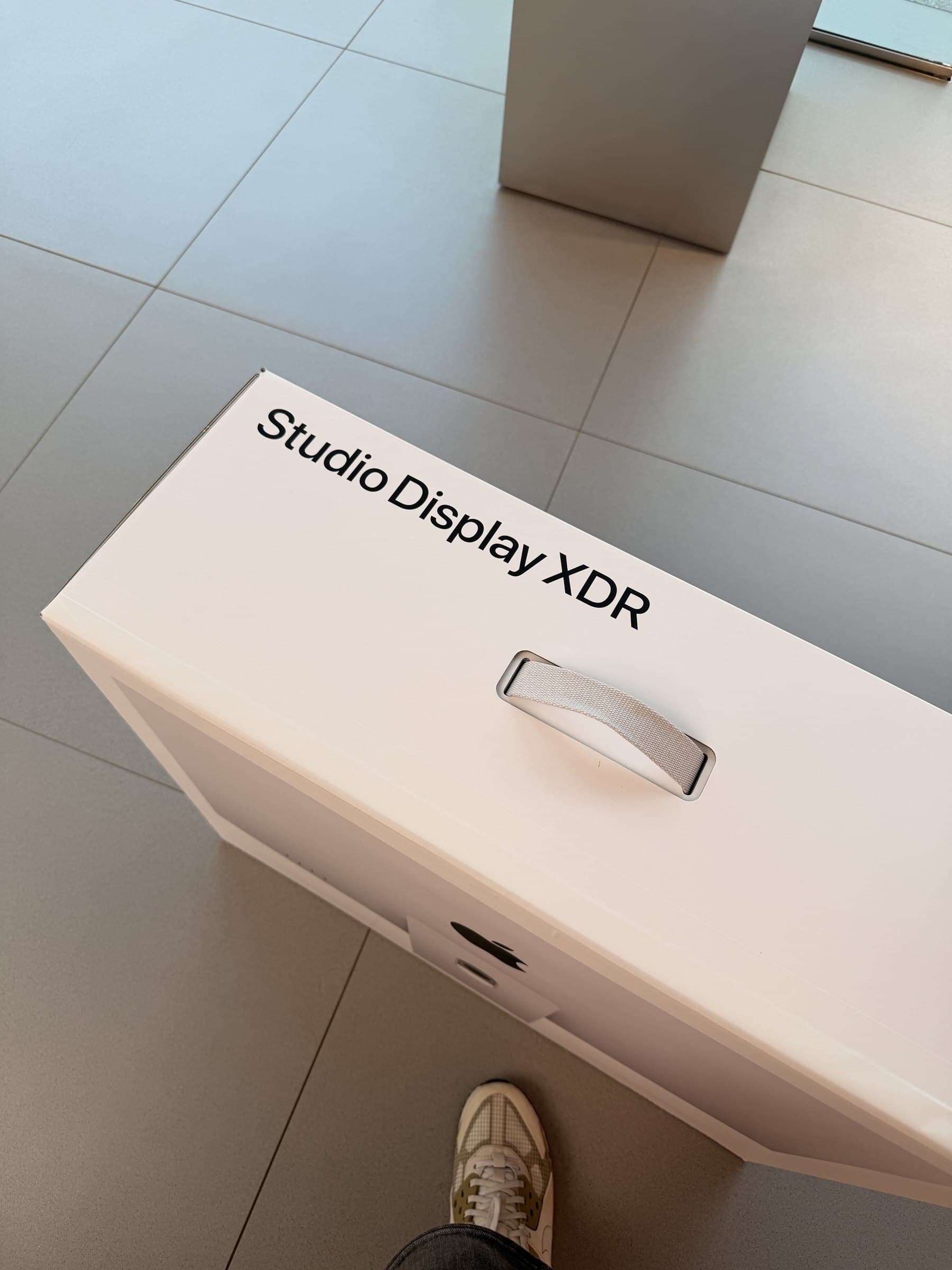
I just spent three grand on a monitor.
There's no version of that sentence that doesn't sound ridiculous, so I'm not going to dress it up. Three thousand pounds. On a screen. To look at.
But this isn't really a post about a monitor. It's about the question sitting underneath it, which turned out to be more interesting than the purchase: when is it genuinely okay to spend serious money on yourself, and when are you just being an idiot with a credit card?
The monitor's going to keep coming up. It's the example, not the point.
The stuff that actually paid off
I've been buying tools for about twenty-five years now. Computers, cameras, lenses, audio kit, software I used twice and software I've used every week since. Some of it was money well spent and some of it is in a cupboard.
What's interesting is which ones turned out to matter.
The first machine I taught myself to edit on - slow, expensive at the time, and the reason I can do half of what I do now. The cameras that have given me nine years of photographs of my kids. Not good photographs necessarily. Just photographs that exist. The kit that quietly turned into a way of earning a living, and the kit that turned into the creative side that keeps me sane.
None of those felt like investments when I bought them. They felt like spending.
The pattern only shows up looking backwards. When your work happens through a tool, the tool isn't a toy - it's the workshop. And every one of those purchases was really the same purchase repeated: money spent on becoming better at something I cared about.
Which is not the same thing as buying stuff. I'll come back to that.
Turning 40 and wanting one thing
I turned 40 this year.
I've written about this already so I won't dig around in it too much, but there's a strange thing that happens around now. You've grafted. You've got the stuff. Someone asks what you want for your birthday and you genuinely cannot think of a single thing - which is either contentment or a mild crisis depending on the day.
And then you realise there is exactly one thing. There's always exactly one thing.
To be clear, nobody bought me this. You don't put a three grand monitor on a birthday list - it's not a present, it's a decision, and it was mine to make and mine to pay for. Which makes it a different kind of purchase. A gift you just say thank you for. This one I sat down with, looked at the number, and chose.
I'd be lying if I said that choice was purely rational. It wasn't. Part of it was a marker - a "you've done the work, you're allowed this" moment. And plenty of people never let themselves have one of those.
Why we won't invest in ourselves
Here's the bit I actually find interesting.
Tell someone you've spent three grand on a monitor and watch what happens. There's a pause. Then, almost always, a question that's really asking you to justify it. Do you need that? Couldn't you have got something cheaper?
Nobody asks that about anything else.
Nobody asks it about a birthday present, or a round at the bar, or a meal out that cost more than it should have. Nobody asks it about the pension, the insurance, the boring sensible direct debits that quietly eat a third of everything. Nobody asks it about Christmas, which every year comes to roughly the price of a good lens.
All of that goes through unquestioned. It's only when the money lands on you - your own work, your own craft, your own days being slightly better - that it suddenly needs defending.
Why is that?
Partly, I think, because spending on other people reads as generosity and spending on yourself reads as appetite. One's a virtue, one's a bit embarrassing. And partly because we've been sold the idea that an investment is something with a return you can put on a spreadsheet - so anything that only makes you better gets filed under indulgence by default.
Which is backwards.
Backing your own craft - your tools, your skills, the thing you're quietly trying to get good at - is one of the very few bets where you're also the person doing the work to make it pay off. You're not handing your money to a fund manager and hoping. You're the variable. That's what separates it from a splurge.
Buy the nicer thing and then make better work with it, and it stops being an indulgence and becomes a decision.
Which is exactly where the monitor sits. It only counts as an investment if I actually make better work on it. If it just sits there looking lovely while I answer emails, then I've bought a very expensive email screen and I should be honest about that.
Spending the money was the easy bit. The rest is on me.
Knowing the difference
I want to be careful here, because none of the above is permission to go and buy something silly.
There's a real line between backing yourself and just buying stuff, and most of the time - genuinely, most of the time - the honest answer is that you don't need the expensive thing. That applies to the monitor too. Most people should absolutely not buy an Apple Studio Display XDR, and I say so in the video at some length.
The test isn't whether you can justify it on paper. You can always justify it on paper.
The test is whether you'll do the work that turns it into something.
Gear without the graft is just gear.
If this sounds like you
I'm not telling anyone to go and spend three grand on a monitor. Most people genuinely shouldn't.
But whatever your version of it is - the camera, the course, the studio time, the decent chair, the thing that makes you slightly better at the thing you actually care about - stop waiting for someone to tell you it's allowed.
Nobody's going to. There isn't a committee.
If you've done the work, you're allowed to back yourself.
Do I regret it? No. I look at it every morning and I'm glad it's there. And then I try to make something on it that earns it.
If you want the full, honest breakdown of the monitor itself - what it's actually like to live with, and who should and shouldn't buy one - it's all in the video.